


Truck Comparison: 2023 Honda Ridgeline vs Toyota Tacoma
The Honda Ridgeline and Toyota Tacoma are two excellent options if you’re considering buying a vehicle in the compact pickup class. Both trucks provide the benefits of ample cargo storage space and powerful engines that you’d expect from a pickup, while offering a more practical option for day-to-day driving than full-sized pickups. But how do these two rivals go head-to-head? Here’s a look at how the Ridgeline and Tacoma compare in some key areas. If you want to learn more, don’t hesitate to contact us at Performance Honda in Fairfield.
Ridgeline vs. Tacoma Engine Specs
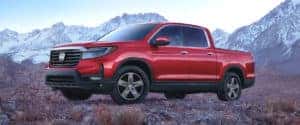
2023 Honda Ridgeline via automobiles.honda.com
All Honda Ridgelines have a 3.5-liter V-6 under the hood that puts out 280 horsepower and 262 lb-ft of torque. This engine has a considerable advantage over the Tacoma’s base engine, which is a 2.7-liter four-cylinder unit that cranks out 159 horsepower. However, an optional upgrade is on offer with the Tacoma: a 278-horsepower V-6 that offers about as much power as the Ridgeline’s engine.
In terms of gas mileage, the Ridgeline achieves 18 mpg on city roads and 24 mpg on the highway. The Tacoma’s fuel economy is about the same, with it managing 20 mpg and 23 mpg, respectively, with its base engine. The larger V-6 manages 19 mpg in the city and 24 mpg on the highway.
Honda Ridgeline vs. Tacoma Cargo and Towing
The Tacoma has a higher towing capacity than the Ridgeline, with the Toyota topping out at 6,800 pounds and the Ridgeline managing 5,000 pounds. However, to reach the Tacoma’s top towing capacity, you need to upgrade to the larger engine and add a towing package. With the base four-cylinder engine, the Tacoma can tow 3,500 pounds.
Both trucks have similar payload capacities for their cargo beds of around 1,500 to 1,600 pounds. The Tacoma offers two bed length options: one measuring 6 feet 1 inch in length and a shorter one measuring 5 feet. All Ridgelines come with a bed that’s 5 feet 4 inches long. There’s 50 inches of space between the wheel wells, which is great for transporting sheets of plywood or drywall.
Ridgeline vs. Tacoma Cabs
The Ridgeline’s Crew cab can seat up to five people, with plenty of legroom in the rear row for adults to travel on longer journeys. The Crew cab has full-sized rear doors, which make it easy for rear-seat passengers to get in and out.
In the Tacoma, you can opt for a four-seat Access cab and a five-seat Crew cab. The Access cab has half-sized rear doors with rear hinges. The second-row seats are compact and will do just fine for short trips. However, if you regularly travel with passengers in the second row, you’ll probably want to opt for the Crew cab to have more space.
The Ridgeline’s base cab includes cloth upholstery, an automatic climate control, and proximity keyless entry. The Tacoma also gets cloth upholstery and boasts manually adjustable front seats.
Ridgeline vs. Tacoma Infotainment and Safety Tech
Both of these trucks have a wide range of entertainment features, but the Ridgeline offers more capabilities in its base trim. The Ridgeline offers an 8-inch infotainment display with a seven-speaker stereo. The Tacoma has a 7-inch display paired with a six-speaker stereo. Both vehicles offer smartphone compatibility with Apple CarPlay and Android Auto and are equipped with other connectivity options such as Bluetooth and USB ports.
Among the optional upgrades available in the Ridgeline are in-bed speakers, an eight-speaker premium stereo, and a satellite-linked navigation system. The Tacoma offers a larger 8-inch display, a premium six-speaker stereo, and wireless device charging.
When it comes to safety features, there’s not much to choose between these two pickups. They both have a solid selection of standard safety features, such as forward collision warning and automatic emergency braking. The Tacoma and Ridgeline also feature adaptive cruise control to help you keep a safe distance from other motorists on the highway.
You can opt to add parking sensors with the Toyota or Honda pickup, which makes it easier to maneuver into a spot, especially if you’re towing a load at the rear. Blind-spot monitoring is another helpful optional safety feature.
Ridgeline vs. Tacoma Trims and Pricing
The Ridgeline is offered in four trims: Sport, RTL, RTL-E, and Black Edition. The Sport has a starting MSRP of around $36,000.
Stepping up to the RTL trim gets you leather upholstery, a moonroof, and some optional driver safety features. Front-row riders benefit from power-adjustable driver’s and passenger seats and a leather-wrapped steering wheel. Opting for the RTL-E gets you the premium stereo with in-bed speakers, a heated steering wheel, and parking sensors. The Black Edition keeps many of the RTL-E’s features but offers some styling elements inside and out in line with its name.
The Tacoma is available in six trims: SR, SR5, TRD Sport, TRD Off-Road, Limited, and TRD Pro. The Tacoma’s more basic cabin design means its base trim has a substantially lower starting price than the Ridgeline, with the SR trim having an MSRP of around $26,000.
The TRD Sport trim adds a power-adjustable driver’s seat and a leather-wrapped shift knob. True to its name, the TRD Off-Road gets a locking rear differential, an off-road suspension, and shocks. The Limited trim brings luxury into the cabin with leather seats, premium stereo, and heated front seats. The TRD Pro combines the luxury of the Limited trim with the utility of the TRD Off-Road, with skid plates and a multi-terrain driving mode on offer.
Now that you know how these two compact pickups compare, we hope we’ve been able to help you choose which vehicle to buy. The Ridgeline offers an upscale interior and powerful engine throughout its lineup, while the Tacoma boasts a more stripped-down appearance and impressive off-roading capabilities.
Would you like to test drive a Ridgeline in Fairfield? Or perhaps you just want to get straight to the purchase process? We’ll be delighted to help you by taking your call at (513) 829-7300 or chatting with you if you drop by our Ohio dealership to check out our inventory in person.
0 comment(s) so far on Truck Comparison: 2023 Honda Ridgeline vs Toyota Tacoma