


The History of Fairfield, OH
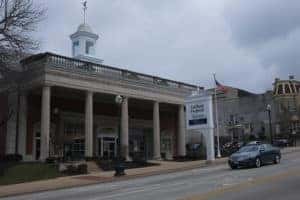
Located in southwestern Ohio about 20 miles north of Cincinnati, Fairfield has a history that dates back several centuries. This city was incorporated in 1955 and has experienced a population boom, thanks to all the transportation additions nearby. Today the city is home to more than 1,200 businesses, including the corporate headquarters for Cincinnati Financial Corporation. If you’re wondering how Fairfield came to be the city it is today, keep reading to learn more about its history.
Fairfield’s Beginnings
Before Europeans settled in the Fairfield area, it was home to several Native American tribes including the Shawnee and the Miami. It wasn’t until 1787 when Judge John Cleves Symmes, who also served as a Revolutionary War colonel and a New Jersey congressman, heard from Major Benjamin Stites about a perfect “garden spot” unlike any he had ever seen.
Judge Symmes visited the area and purchased land situated near the two Miami Rivers. He bought about 330,000 acres of land for approximately 67 cents per acre from the Continental Congress. In 1794, President George Washington signed off on the purchase, which came to be known as the Miami, or Symmes, Purchase.
Many of the area’s first inhabitants were Revolutionary War veterans from New Jersey who had served under General Anthony Wayne and General Arthur St. Clair. These pioneers gave the area the name of Fairfield to honor the natural beauty of the surrounding fields. Living during this time proved difficult for many settlers who endured hunger, inclement weather, and conflicts with Native Americans.
Transportation in Fairfield
During the 1850s, the Cincinnati, Hamilton, and Dayton Railway (known as CSX today) was extended through Fairfield. This allowed several communities to develop, including the villages of Stockton and Schencks Station. The main ways of getting in and out of the area were via State Route 4 and U.S. Route 127. At the turn of the century, streetcars moved along traction lines near Pleasant Avenue. These streetcars could travel up to 90 mph, allowing people to get where they needed to go much faster.
Birth of Fairfield
With the influx of transportation options and its prime location, the area became a sought-after place to settle. The Hamilton Chamber of Commerce understood the potential for the area, so in October 1953, it produced a map highlighting the areas it wanted to annex. The map showed the Hamilton border extending southward past Nilles Road and west past Gilmore Road. The Chamber sought to convince landowners that by going through with the annexation, they would benefit from increased property values, cheaper utility rates, and better street management.
Residents, however, didn’t fully accept the potential for annexation. They believed it would result in lost revenues from industrial entities as well as an end to self-government. On July 10, 1954, these concerned residents united to create a village, and Fairfield came into official existence on October 20, 1955, via a special census.
Residential Growth
The 1960s saw a tremendous amount of growth for Fairfield as the city began to offer numerous services. It expanded fire and police protection, increased the production of water, and installed a new sewer system. Population growth caused the need for a post office, church, library, and high school. The addition of the Interstate 275 beltway around Cincinnati in the 1970s provided easy access to Fairfield from the northern Cincinnati suburbs, which caused an influx in residential and commercial investments in the community.
Once the 1970s hit, the community became a popular location for families looking for homes. Fairfield’s school district received accolades as one of the best in the area, and businesses experienced welcoming invitations to open in the city. At the end of the 1970s, Fairfield’s population skyrocketed to more than 31,000 people.
Growing Pains
Due to the unprecedented growth, the city’s residents realized they needed to revisit its government structure. Residents voted to install a Charter for the City of Fairfield, which adopted a council-administrator type of government. This took effect on January 1, 1980. With this system, political leadership is combined with managerial experience, allowing the local government to become highly adaptable and effective.
Despite the huge amount of residential growth, Fairfield experienced some issues that affected the community. General Motors declared that the Fisher Body plant would be shuttered during 1989’s first quarter. This caused the city to lose 28% of its revenue, which equated to about $1.7 million, as well as a loss of 2,500 jobs. The city also worked to improve roads and control floods.
In the 1990s, the city saw an influx in business development. Its population growth began to slow, and Fairfield began to concentrate on the development of both commercial and residential areas. The city also improved and expanded the sewer system by providing detention basins to control stormwater.
Fairfield Today
Fairfield continues to be an attractive place to live and do business. Its residential areas approach total development, while people continue to flock to high-paying jobs within the industrial and commercial zones. Fairfield’s top two employers are insurance companies, which include Cincinnati Financial Corporation and Liberty Mutual. Other top regional staples such as Koch Foods, Skyline Chili, and Jungle Jim’s International Market also have businesses in Fairfield.
People wanting to spend time outside can enjoy more than 500 acres of parkland, including Harbin Park’s 230 acres. Marsh Lake Park is another popular spot with its 60-acre quarry lake regularly stocked with fish. One of the city’s newest parks is Huffman Park, which promotes ecology through native plants and a prairie where wildlife live.
As you can see, Fairfield has come a long way since people first lived on its land several centuries ago. At Performance Honda, we know how important the community is to us, and we strive to keep involved through community service projects. If you’re interested in learning more about what Performance Honda has to offer, contact us. We’re here to answer any questions you might have and help you drive around Fairfield in a new vehicle today.
0 comment(s) so far on The History of Fairfield, OH